




























Back Squat vs Front Squat: Key Differences
The Back squat and front squat are two of the most valuable exercises for anyone who trains, regardless of whether you are training for sport, or simply someone who wants to move better, feel stronger, and stay healthy for life. Leg strength is widely considered one of the most reliable physical indicators of overall longevity and healthy aging.
Squatting helps build lower-body strength that directly transfers to everyday tasks like standing up from a chair, carrying groceries, climbing stairs, or playing with your kids.
In this article we will discuss the key differences in both squats and how to train them.
Which Squat Should You Focus On?
Generally speaking, the back squat is an excellent choice for building overall leg and posterior chain strength. If you train the Olympic lifts or simply want more variety in your squat training, the front squat can be a valuable addition.
A better question may be: What are you training for?
- Beginners or those training for general fitness: Focus on the back squat, as it is generally easier to learn and requires less mobility. If possible, incorporate front squats periodically for variety.
- Those with limited mobility: The back squat is often the more accessible option.
- Powerlifters and strength-focused lifters: Prioritize the back squat, as it allows for heavier loading and greater emphasis on the posterior chain.
- Olympic weightlifters: Prioritize the front squat due to its direct carryover to the clean and its emphasis on quad strength.
- Sprinters, jumpers, and other athletes: The front squat can be beneficial for developing lower-body power and reinforcing an upright torso position.
Setup and Execution
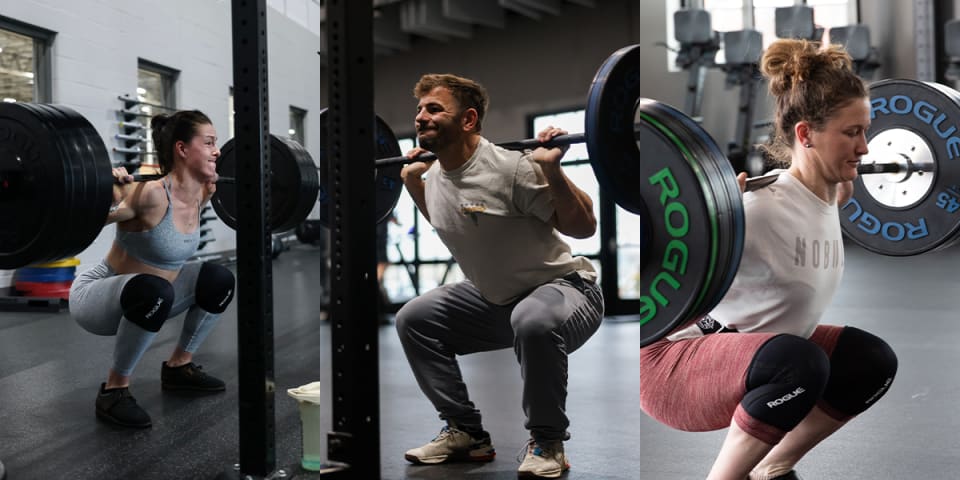
Back Squat
Set Up:
The barbell rests across the upper back.
- In the high-bar version, it sits on top of the traps.
- In the low-bar version, it sits lower on the rear delts and traps.
- Feet should be approximately shoulder width apart and the toes slightly turned out.
- Knees and hips should be fully extended.
- Look forward and brace the core.
Execution:
- Unrack the bar, step back, and establish your stance.
- Descend by pushing your hips back and down while keeping your chest up.
- Maintain a flat back during the lift.
- The torso lean tends to be greater with the low bar back squat when compared to the high bar variation.
- Keep the weight balanced over your midfoot.
- Squat to a depth where your hip crease is clearly lower than the top of the knee.
- To stand, concentrate on driving through your heels while keeping the knees tracking over your toes.
- Return to standing tall with full extension of your knees and hips.
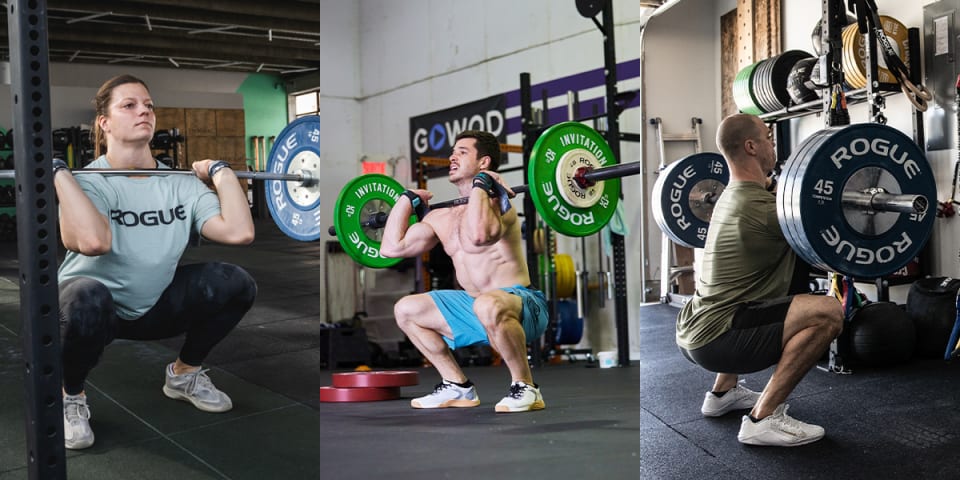
Front Squat
Set Up:
The barbell rests in the front rack position across the front of the shoulders.
- Keep your elbows pointed forward and high throughout the lift.
- Hold the bar with a loose fingertip grip with upper arms parallel to the floor.
- If shoulder, wrist, or upper back mobility is limited, a crossed-arm position can be used instead.
- Feet should be approximately shoulder width apart and the toes slightly turned out.
- Knees and hips should be fully extended.
- Look forward and brace the core.
Execution:
- Unrack the bar, step back, and establish your stance.
- Descend by pushing your hips back and down while keeping your chest up.
- Maintain a flat back during the lift.
- The torso tends to remain more upright in the front squat due to the bar position on the front of the shoulders.
- Keep the weight balanced over your midfoot.
- Squat to a depth where your hip crease is clearly lower than the top of the knee.
- To stand, concentrate on driving through your heels while keeping the knees tracking over your toes.
- Return to standing tall with full extension of your knees and hips.
The front squat tends to be more quad-dominant and requires greater thoracic (upper back) mobility and ankle dorsiflexion (how far your knees can travel over your toes while keeping your heels down) due to the more upright torso.
Mechanical Differences
The bar position changes how the squat feels and where the load goes:
- Back Squat: More forward lean shifts emphasis toward the hips and posterior chain, especially in the low-bar variation.
- Front Squat: More upright torso increases knee bend and places more emphasis on the quads.
These differences in body position and joint angles change how force is distributed, which is why most people can lift more in the back squat than the front squat.
Muscle Groups and Activation
Both squats train the quads, glutes, hamstrings, and core, but the emphasis shifts based on bar position:
- Back Squat (especially low-bar): More emphasis on the glutes, hamstrings, and lower back. It builds strength through the hips and supports powerful hip extension.
- Front Squat: More emphasis on the quads, upper back, and core. The more upright position forces the abs and upper back to work harder to keep the torso stable.
In general, front squats tend to feel more quad-dominant, while back squats place more demand on the hips and posterior chain.
Final Thoughts
The back squat and front squat are complementary tools rather than rivals. The “best” squat depends on your goals, sport, mobility, and training history. Many successful athletes and coaches use both strategically throughout the year.
Whether your priority is to be fit and strong for whatever life throws at you, or whether you are training for a sport, mastering these two variations of squat and understanding when to emphasize each, will make you stronger, and more capable.
For best results, prioritize technique and then progressive overload.